<!DOCTYPE html>
The Difference Between a Clogged Filter and a Broken Blower Motor
Body font-family: Arial, Helvetica, sans-serif; line-height: 1.6; color: #222; margin: 0; padding: 0; background: #f7f7f7;
.wrap max-width: 860px; margin: 24px auto; background: #fff; border: 1px solid #e3e3e3; border-radius: 8px; padding: 24px;H1, h2, h3 line-height: 1.25; margin-top: 24px;
H1 font-size: 28px;H2 font-size: 22px;
H3 font-size: 18px;P margin: 14px 0;
.note background: #f1f9ff; border: 1px solid #cde7ff; padding: 12px 14px; border-radius: 6px;.grid display: grid; grid-template-columns: 1fr; gap: 16px;
@media (min-width: 720px) .grid-2 grid-template-columns: 1fr 1fr;.cta background: #0b5fff; color: #fff; padding: 18px; border-radius: 6px; margin-top: 28px;
.cta a color: #fff; text-decoration: underline;.small font-size: 13px; color: #666;
Ul, ol margin: 0 0 16px 22px;
The Difference Between a Clogged Filter and a Broken Blower Motor
AC repair Phoenix insights from Day & Night Air Conditioning, Heating, & Plumbing. Technical field notes for central air conditioners, heat pumps, rooftop units, package units, ductless mini-splits, and split systems across Maricopa County.
In Phoenix, where summer highs often pass 110°F, airflow is survival. Central air conditioning depends on two things. First, a clear path for air through a clean filter. Second, a healthy blower motor that can move that air across the evaporator coil. When a system blows warm air or struggles to cool, the root cause often lives in one of those two places. Misreading the symptom wastes time and money, especially during a heatwave.
This article explains how technicians separate a simple clogged filter from a failing or broken blower motor. It references common equipment in Phoenix homes and commercial buildings, including rooftop package units, split systems, and high-efficiency heat pumps. It also gives local context for Ahwatukee Foothills, Arcadia, Biltmore, Desert Ridge, North Mountain, Maryvale, South Mountain, Sunnyslope, and Paradise Valley Village, where dust load and roof heat drive unique failure patterns.
How an AC moves air in Phoenix heat
Every HVAC system has an air handler with a blower motor. The motor drives a wheel or fan to pull return air through a filter, across the evaporator coil, and out through supply ducts. The evaporator coil absorbs heat as refrigerant, often R-410A, boils inside the tubing. Without solid airflow, the coil temperature drops below freezing, moisture condenses and turns to ice, and the system loses capacity. Low airflow also raises static pressure, strains the blower, and can trip safety limits.
On the roof, package units and RTUs in Phoenix bake in direct sun. On slab homes, air handlers can sit in hot garages. Both conditions punish blower motors and start capacitors. Meanwhile, dust from Papago Park and South Mountain trails loads MERV filters fast. The wrong filter rating or missed change-out date can cause a warm-air call in a single weekend.
Clogged filter vs broken blower motor: what changes in the system
A clogged filter is an airflow restriction. Static pressure climbs and total system airflow falls. Evaporator coil temperature drops, and ice can form on copper refrigerant lines at the air handler. The condenser keeps working hard. Head pressure can rise, but the compressor still runs. Supply vents feel weak. Rooms far from the air handler suffer first.
A broken blower motor is a loss of air movement. It presents as no airflow or very low airflow, even with a clean filter. The indoor fan may not start, may short cycle, or may squeal and then stall. The condenser can still run, which risks a frozen coil and liquid floodback to the compressor. If the motor seizes, a smell like hot windings or a tripped breaker may follow. In many Phoenix failures, the motor dies with a failed start capacitor or a cooked contactor caused by roof heat and high duty cycles.
Fast field comparison
- Filter clog: Weak airflow at all vents, louder return air noise, normal blower sound but strained, frosty suction line at the air handler, coil icing after 15 to 60 minutes.
- Blower motor failure: No airflow or pulsing airflow, outdoor unit runs while indoor fan is silent, burning smell or squeal at start, breaker or float switch trips soon after call for cooling.
- Filter clog energy effect: Higher energy bills due to longer run time and short cycling, but system still cools weakly once ice melts.
- Blower failure energy effect: Little to no cooling even with system on, compressor at risk, fast overheating in Phoenix heat.
- Common Phoenix link: Dust storms and construction near Camelback Mountain or Chase Field clog filters fast. Roof heat near 150°F kills capacitors and accelerates blower wear.
Technical checkpoints a Phoenix technician runs through
Diagnosis starts with airflow and power. An NATE-certified technician checks return filter condition, measures static pressure, tests blower amperage and capacitor values, and verifies thermostat commands. The evaporator coil face may be inspected for dust matting. If the unit is a rooftop package, motor bearings and wheel balance get special attention because of sun exposure and dust ingestion.
Filter inspections that matter in the Valley of the Sun
In Phoenix, filters load quicker due to dust and indoor pets. Many homes in 85032 and 85050 run medium or high MERV filters in a 1-inch slot. That can starve airflow at high cooling loads. A technician looks for collapsed pleats, bypass air, and bowed frames. If the filter bows into the return, the effective area shrinks and static pressure spikes. Rooftop units may have two to four filters; missing any one allows coil fouling but still chokes airflow at high speed. A filter dated beyond 60 days in peak summer often signals the issue by itself.
Blower motor testing under Phoenix conditions
Motors on Arizona rooftops fail from heat stress. Testing includes a locked-rotor spin check, capacitor microfarad measurement, winding resistance check, and amp draw versus nameplate. PSC motors draw high amps when filters clog. ECM motors trip on thermal or report fault codes. A start capacitor that drifts 20 to 30 percent low can prevent a PSC motor from starting under head pressure. Many Day & Night service trucks carry heavy-duty start capacitors and universal contactors to restore service on the first visit during a heat event.
What the refrigerant circuit reveals
A clogged filter lowers evaporator saturation temperature. Suction pressure falls and the suction line can frost. If the filter remains clogged, ice bridges across fins and airflow falls even more. With a failed blower motor, suction pressure also drops, but the change is abrupt and often severe. The evaporator may freeze solid within minutes. In a heat pump, defrost control never helps in cooling mode. A technician cross-checks superheat, subcooling, and the thermostatic expansion valve response. Low R-410A charge or a restricted TXV can mimic low airflow, so gauges and a line temperature probe resolve the tie.
Electrical clues common in Phoenix
Start capacitors and contactors fail fast under roof heat. If a blower hums and will start with a manual spin, the capacitor is suspect. If the blower is silent and the contactor is pitted, the motor may not get stable power. A relay switch or low-voltage short can also block the fan call. In older Lennox, Trane, Carrier, Goodman, Rheem, York, and Bryant units, harness brittleness and sun-baked insulation cause intermittent failures that look like motor faults. Skilled diagnosis prevents parts darts on a 115°F day.
Real Phoenix cases: what failed and why
Arcadia split system, 85018: The homeowner reported warm air and higher bills. A 1-inch MERV 13 filter had two months of dust, dog hair, and drywall powder from a remodel near the Biltmore area. Static pressure measured 0.95 in. W.c. Against a system designed for 0.50. The blower amperage peaked but stayed within limit. The evaporator coil was iced. A filter change and a coil thaw restored normal pressures. The technician recommended a media cabinet with a deeper filter for lower pressure drop.
Desert Ridge rooftop package, 85050: A restaurant near Loop 101 called for no airflow. The condenser ran and the suction line froze within minutes. The blower motor was a PSC unit with a bulged start capacitor. Ambient roof temperature measured near 150°F mid-afternoon. The motor windings tested good. A new capacitor and a wheel cleaning put the unit back online fast. The manager enrolled in a quarterly HVAC maintenance plan to catch capacitors and contactors before they strand staff during dinner service.
Ahwatukee Foothills heat pump, 85048: The system short cycled. Ice formed on copper lines at the air handler, and water overflowed the secondary pan. The filter looked clean. The technician found a matted evaporator face hidden behind the filter rack and a partially clogged condensate drain line from a monsoon humidity spike. A coil cleaning and drain flush resolved the problem. The blower motor passed tests. The fix prevented compressor floodback and a costly failure.
How clogged filters create bigger failures in Maricopa County
In Phoenix, a clogged filter is not harmless. Long runtimes with high static pressure wear out blower bearings and belts in package units. Evaporator icing sends refrigerant back to the compressor as liquid during restarts, which can crack valves and overheat windings. Condensate spills trigger float switches and shut systems down during peak heat. That leads to short cycling and emergency calls labeled as AC blowing warm air. What began as a ten-dollar filter turns into a same-day blower or compressor replacement during a 115°F streak near Chase Field or the Footprint Center district.
Where blower motors fail first in Phoenix systems
Rooftop units and package units on flat roofs fail sooner due to radiant heat and dust. Motors work harder moving air through hotter ductwork and tighter filters during peak hours. Heat pumps that run year-round in Paradise Valley Village see higher blower hours. Older air handlers in Maryvale and Sunnyslope may have PSC motors that run hot on restrictive filters. Newer ECM motors in Biltmore and Arcadia homes can protect themselves with fault codes, but they still fail when the wheel mashes with dust or bearings seize.
On split systems with indoor air handlers in garages across South Mountain, the blower sees high ambient temperatures. That reduces capacitor life and dries out motor lubrication. In North Mountain and Desert Ridge, dust events pack blower wheels. Balance drifts, noise rises, and the motor draws more amps. A squealing fan motor can be a belt or bearing. If ignored, the pulley heats and the motor locks.
What homeowners and property managers can safely check
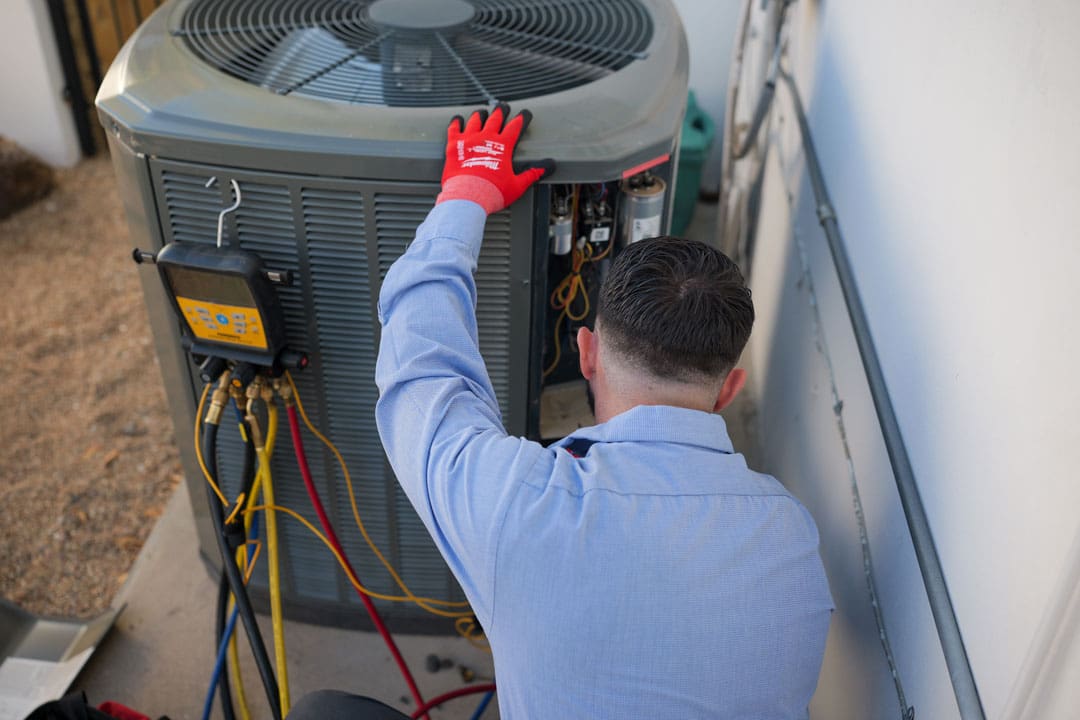
Simple checks solve many calls. Safety comes first. Power should be off at the thermostat and breaker before opening any panel. A filter check is safe for most homes. If the filter is dark or bowed, change it and run the system for an hour with the fan set to On to thaw remaining ice. On rooftop units, panels should remain closed for safety and warranty reasons. For drain lines, inspect the condensate overflow switch near the air handler for signs of trip. If water is present, run the fan only and request service.
- Replace an obviously dirty return filter with the correct size and rating. Note the date and write it on the frame.
- Check that supply vents and returns are open and unblocked, especially behind sofas and rugs.
- Set the thermostat to Fan On for 20 to 30 minutes if frosting occurred, then resume Cool and monitor airflow.
- Listen for the indoor blower at startup. A hum without spin suggests a failed capacitor or motor.
- If water is in the drain pan or a float switch trips, stop cooling and schedule service to prevent overflow.
If the blower stays silent and the outdoor unit runs, a broken motor, bad relay, or failed control board is likely. If airflow returns after a filter change, the cause was the restriction. Short cycling after reset points to deeper issues such as a clogged evaporator, refrigerant leaks, or thermostat malfunctions.
Why Phoenix filter choices matter: MERV, cabinet depth, and static pressure
Many Phoenix homes use 1-inch filters in hall returns. High MERV in a thin filter creates high pressure drop when dust loads. A media cabinet with a 4-inch filter increases surface area and reduces restriction. That keeps static pressure lower, protects blower motors, and helps maintain rated tonnage. In buildings near Phoenix Sky Harbor International Airport, high particle load suggests a schedule at 30 to 45 days for 1-inch filters during summer. Media filters can often run 90 days or more, but inspection is the rule.
The right filter is a balance. Too low a MERV rating lets dust foul the evaporator coil and blower wheel. Too high a rating in a 1-inch slot starves airflow and freezes coils. An HVAC contractor should measure static pressure across the air handler and coil. The acceptable total external static for many residential systems is near 0.50 in. W.c., with some variation by brand. If a reading hits 0.80 to 1.00 on high speed, the blower works far beyond design. In Phoenix, that shortens motor life.
Appliance types and how failures present in Phoenix
Central air conditioners in older Phoenix builds often use split systems with air handlers in garages or closets. A clogged filter causes weak airflow and frozen lines. A broken blower motor causes no airflow while the condenser runs and the suction line ices fast.
Heat pumps are common across Ahwatukee Foothills and Paradise Valley Village for mild winters. In cooling mode, symptoms mirror standard AC units. In heating mode, a bad blower trips high limits and can mimic a failed outdoor unit. ECM blowers in high-efficiency heat pumps often log errors that speed diagnosis.
Ductless mini-splits in Arcadia sunrooms and Biltmore casitas use washable screens and variable-speed indoor fans. A clogged screen cuts capacity. A failed indoor fan motor on a mini-split usually generates an error code. Precision brands like Daikin and Mitsubishi Electric display codes on the head or remote.
Rooftop units and package units across commercial corridors near Chase Field and the Heard Museum face wind-blown debris and high sun load. Filters clog fast after dust storms. Blower belts slip and squeal. Motors overheat and trip. Rapid response avoids dining room closures and product loss.
Brand notes that matter for Phoenix service
Day & Night field teams see a wide range of equipment. Trane, Carrier, Lennox, Goodman, Rheem, York, and Bryant units sit on many Phoenix roofs and slabs. American Standard and Daikin heat pumps, and Mitsubishi Electric ductless systems appear in higher-end remodels from Desert Ridge to Paradise Valley. Factory training helps with brand-specific static targets, motor part numbers, and control board logic. Using genuine OEM parts protects SEER ratings and keeps warranties valid.
On older PSC-motor designs, a healthy start capacitor keeps the blower from stalling under filter load. On ECM designs, proper dip-switch or software setup keeps airflow targets correct when filter type changes. Incorrect setup causes coil icing even with a clean filter, which looks like a clog but is a configuration error.
Symptoms that push this from DIY to emergency
Phoenix heat does not allow long downtime. If indoor temperatures in Maryvale or Sunnyslope rise above safe limits, an emergency call is justified. A frozen evaporator coil, tripped high-pressure switch, or water spill in a hallway ceiling can turn into property damage fast. For businesses near Camelback Mountain or Papago Park, a late-afternoon blower failure can shut doors and spoil inventory.
Same-day service across 85016, 85018, 85021, 85032, 85044, 85048, 85050, and 85085 helps families and staff avoid heat-related illness. A team familiar with Phoenix codes and roof access safety moves faster and works cleaner. Licensed, bonded, and insured care with ROC compliance protects owners and property managers.
How a pro confirms the difference in one visit
The diagnostic path is structured. First, confirm filter condition and airflow across returns and key supplies. Second, check blower operation and amperage at start and run. Third, test capacitor health. Fourth, read suction and liquid pressures to rule out refrigerant leaks. Fifth, check contactors, relay switches, and low-voltage signals. Sixth, measure total external static pressure and compare with blower tables. This narrows the fault to a restriction or a motor failure with confidence.
Trucks staged across Phoenix carry universal contactors, heavy-duty start capacitors, common PSC and ECM blower motors, media filters, and drain cleaning tools. That inventory turns a breakdown near the Arizona State Capitol into a fast restoration, not a return visit. If ice is present, the system is set to Fan On while paperwork and parts prep proceed. That thaw time makes the repair faster and safer for the evaporator coil.
Preventive steps tuned to Phoenix homes and businesses
Filter schedules must respect dust and run hours. In the Valley of the Sun, 30 to 60 days is common for 1-inch filters during summer. Media filters can go longer with inspection. Roof-mounted systems need quarterly checks for belts, blower wheels, contactors, and cabinet seals. Coil cleanings for both evaporator and condenser protect capacity and reduce energy use.
A maintenance visit includes blower wheel inspection, bearing sound check, capacitor testing, drain line flush, static pressure reading, thermostat calibration, and expansion valve performance review. Building owners near Phoenix Sky Harbor often schedule shoulder-season maintenance to avoid flight-day heat spikes. Homeowners in Arcadia and Biltmore plan service before the first 105°F day to catch weak motors and worn belts.
What “AC blowing warm air” usually means in Phoenix
Most warm-air calls trace back to one of three issues. First, restricted airflow from a clogged filter or a fouled evaporator coil. Second, electrical failure at the start capacitor or contactor, which keeps the compressor or blower from running. Third, a refrigerant leak that drops R-410A charge, freezes the coil, and forces warm discharge air. The difference is clear on a gauge set and at the blower. Skilled techs use numbers, not guesses.
If the blower runs and vents are weak, the filter or coil is likely the culprit. If the blower is silent and the outdoor unit runs, the motor, capacitor, or control board needs service. If the system trips and restarts often, short cycling can point to high static, clogged drains, or thermostat malfunctions. Wasted time during peak heat costs comfort and increases energy bills across Maricopa County.
Commercial considerations along Phoenix corridors
Rooftop package units serve many shops and restaurants near Chase Field and the Footprint Center. Dust in parking lots loads filters quickly. After monsoon spikes, condensate drains clog and float switches shut systems down in the dinner rush. Belts stretch and slip. Motors squeal. A broken blower motor stops airflow to the entire space. A clogged filter reduces capacity first in the far zones.
A service partner that stocks belts, capacitors, contactors, and common blower motors can turn a near-closure into a short pause. Fixed-price repair quotes avoid surprises. Uniformed experts with fall protection and rooftop access training work safer and faster. That protects staff and guests across Glendale, Peoria, Tempe, Scottsdale, Mesa, Chandler, Gilbert, and Paradise Valley as well.
Why this distinction matters for AC repair Phoenix searches
Residents searching for AC repair Phoenix or emergency air conditioning repair near me want speed and certainty. The fastest path comes from a clean triage. If it is a filter, the fix is minutes. If it is a blower motor, a truck needs the right part and the tech needs the right tests. The gap between those two outcomes is comfort and safety during a 115°F afternoon in Maricopa County.
Homeowners in 85018 can lose attic temperatures to 140°F by noon. A wrong guess adds hours. Shaded Arcadia streets do not change that fact. Phoenix systems need airflow and blower health. A trusted HVAC contractor that reads symptoms quickly, carries parts, and validates repairs with measurements ranks as a life-safety partner, not a vendor.
How Day & Night resolves filter clogs and blower failures in one visit
Day & Night Air Conditioning, Heating, & Plumbing fields NATE-certified technicians across Phoenix, AZ, with same-day and 24/7 emergency AC repair coverage. The team services Trane, Carrier, Lennox, Goodman, Rheem, York, Bryant, American Standard, Daikin, and Mitsubishi Electric. Trucks are stocked with heavy-duty start capacitors and universal contactors to achieve a first-visit restoration. Clean diagnostics reduce callbacks and protect compressors and blower assemblies.
Service extends through Ahwatukee Foothills, Arcadia, Biltmore, Desert Ridge, North Mountain, Paradise Valley Village, Maryvale, South Mountain, and Sunnyslope, with rapid dispatch to 85001, 85016, 85018, 85021, 85032, 85044, 85048, 85050, and 85085. Landmarks such as Camelback Mountain, Phoenix Sky Harbor International Airport, Papago Park, Chase Field, the Heard Museum, the Arizona State Capitol, and the Footprint Center help crews stage for the shortest routes in heat emergencies.
The company is licensed, bonded, and insured under ROC #133378 and holds a BBB A+ rating. Upfront fixed-price guarantees and same-day service policies reduce stress during outages. Professional, uniformed experts arrive with the parts and tools that match Phoenix systems, from central air conditioners and heat pumps to ductless mini-splits, split systems, and rooftop package units.
Need fast AC repair in Phoenix?
Day & Night provides 24/7 emergency air conditioning repair near Phoenix homes and businesses. Dispatch covers all of Maricopa County with priority for heat-related risks. Mention the $50 off AC repair coupon for immediate savings on qualified services. Ask about central air conditioning restoration and HVAC maintenance tuned to Phoenix dust and monsoon cycles.
Call Day & Night Air Conditioning, Heating, & Plumbing now or schedule online. Service is available across Phoenix, Scottsdale, Tempe, Mesa, Chandler, Glendale, Peoria, Gilbert, and Paradise Valley.
Credentials: NATE-Certified Technicians. Licensed, Bonded, and Insured. ROC #133378. BBB A+ Rating. Same-Day Service. Fixed-Price Guarantee.
Targeted searches such as AC repair Phoenix and emergency air conditioning repair near me connect residents to the closest crew. Map-pack response times improve when landmarks and zip codes are included in the request.
air conditioning repair Phoenix
Day & Night Air Conditioning, Heating & Plumbing 3669 E La Salle St,Phoenix, AZ 85040 (602) 584-7758 www.dayandnightair.com AZ Licenses: ROC335883 | ROC335884 Google Maps | Facebook | Instagram | LinkedIn